
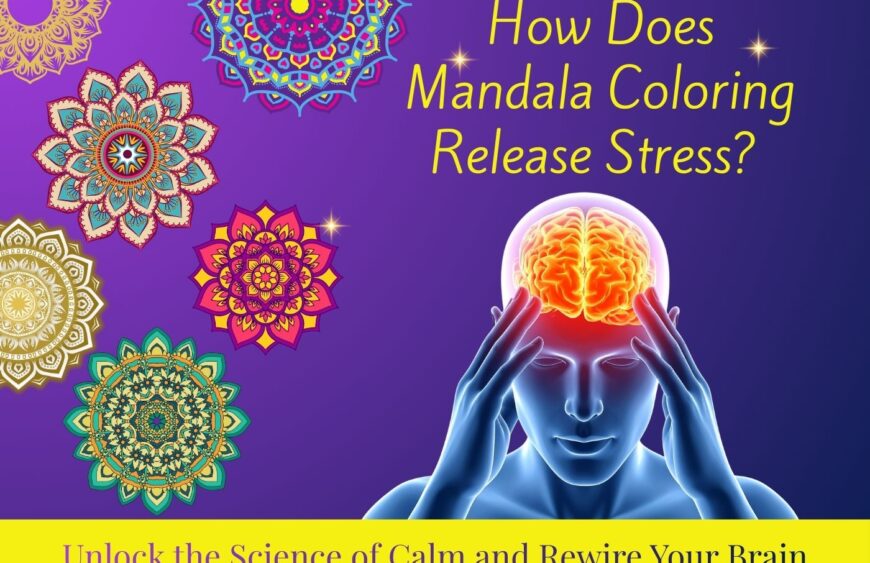
Mandala coloring has emerged as a unique therapeutic activity that bridges the worlds of art and science. Rooted in art therapy for stress relief, it offers a creative outlet that actively promotes mental wellness by engaging the mind in focused, mindful practice.
In today’s fast-paced world, the surge in popularity of mindfulness coloring for adults reflects a growing collective search for effective ways to manage stress and cultivate calm. This trend highlights how simple, accessible activities can empower individuals to slow down, reconnect with themselves, and navigate daily pressures more skillfully.
The question how does mandala coloring release stress? invites an intriguing exploration into the brain’s relaxation mechanisms. Mandalas—geometric, symmetrical designs—serve as more than just artistic patterns; they act as gateways that help the brain enter states associated with deep calm and focus.
Science of calm unfolds when engaging with mandalas, revealing how this meditative coloring practice activates neural pathways that lower anxiety and enhance emotional balance.
Discovering the mandala coloring benefits means uncovering a scientifically supported way to rewire your brain toward resilience and tranquility. This article delves into the fascinating intersection between creativity and neuroscience to unlock how mandala coloring can become an essential part of your stress relief toolkit.
The Power of Mandalas: Understanding Their Therapeutic Role
1. Mandalas Across Cultures: Symbols of Wholeness and Unity
Mandala symbolism has deep roots across various cultures and spiritual traditions, often representing wholeness, unity, and cosmic order.
- Originating from the Sanskrit word for “circle,” mandalas serve as visual metaphors for the universe and the self.
- In Hinduism and Buddhism, mandalas are used as sacred tools for meditation, symbolizing the journey toward spiritual enlightenment and balance.
- Native American sand paintings and Celtic knots also echo the motif of circular integration, reinforcing the universal appeal of mandala imagery.
2. The Geometric Meditation of Mandalas: Focusing the Mind
The geometric meditation elicited by mandalas comes from their intricate symmetry and repetitive patterns that guide focused attention.
- Engaging with these detailed designs encourages a meditative state where the mind quiets and distractions fade, allowing for enhanced mental clarity.
- This process mirrors traditional mindfulness techniques by anchoring awareness to a single point of focus—the shapes, lines, and colors within the mandala—promoting relaxation through structured visual engagement.
- The balance between complexity and order in mandalas stimulates a calming cognitive flow that can disrupt cycles of rumination or anxiety.
3. Carl Jung’s Exploration: Mandalas as Mirrors of the Unconscious
Psychological effects of mandalas extend beyond relaxation into realms of emotional regulation and cognitive processing:
- Carl Jung famously employed mandalas in psychotherapy as representations of the unconscious self, believing they could facilitate healing by revealing inner harmony or conflict.
- Modern psychological studies confirm that creating or coloring mandalas activates brain areas associated with creativity, concentration, and emotional balance.
- This engagement fosters a sense of control and accomplishment, key factors in reducing perceived stress levels.
4. Art Therapy Applications: Mandalas for Stress Relief
In art therapy for stress relief, mandalas function as accessible yet profound tools:
- Coloring or drawing mandalas allows individuals to externalize emotions nonverbally while simultaneously focusing on a calming task.
- Therapists use mandala-based exercises to help clients explore feelings safely within a structured format that encourages mindfulness without overwhelming cognitive load.
- Groups participating in mandala art therapy report decreases in anxiety symptoms alongside increased positive mood states, highlighting its therapeutic effectiveness.
5. The Unique Power of Mandalas: Cultural Richness Meets Therapeutic Potential
The combination of cultural richness, meditative geometry, psychological resonance, and practical application makes mandalas uniquely suited for promoting integration and balance within the mind-body system.
Understanding the Science: How Mandala Coloring Affects Your Brain
The Science Behind Coloring
Studies show that coloring mandalas engages various parts of the brain at once, providing both mental and emotional benefits.
- Visual Processing: The brain’s visual areas, mainly in the occipital lobe, are activated as it interprets the intricate patterns and color choices in the mandala’s symmetrical design. This visual stimulation helps maintain focus and encourages deep concentration.
- Decision-Making: The frontal lobe, responsible for executive functions, becomes active when making decisions about colors and planning how to fill in complex spaces. This involvement enhances problem-solving abilities and working memory while allowing creativity to flow.
“When you color a mandala, you’re not just filling in shapes — you are activating brain circuits responsible for both creativity and control.”
The Role of Brain Waves
Alpha brain waves, which occur at a frequency of 8–12 Hz, play a vital role in this process. These waves are associated with a state of relaxed alertness—perfect for reducing stress and practicing mindfulness.
During mandala coloring sessions, there is an increase in alpha wave activity. Neuroscientists link this with lower anxiety levels and a greater sense of calm while still maintaining mental clarity and focus. This balance between relaxation and wakefulness promotes emotional regulation and reduces negative thinking.
Supporting Research
Several studies back up these findings:
- EEG studies show that participants have more alpha waves when doing mindful coloring activities compared to resting or free drawing.
- Functional MRI scans indicate increased activity in areas of the prefrontal cortex associated with controlling attention and regulating emotions during structured coloring tasks.
- Clinical trials involving individuals with anxiety disorders demonstrate significant reductions in stress markers—such as heart rate and cortisol levels—after regular mandala coloring exercises.
Long-Term Benefits
Mandala coloring offers benefits beyond temporary relaxation by helping to rewire neural pathways through repeated focused practice:
- Neuroplasticity: It strengthens connections between areas processing sensory information and those controlling executive functions.
- Breaking Negative Patterns: It interrupts harmful thought processes by redirecting cognitive resources toward being present.
- Mood Enhancement: It boosts mood through dopamine release linked to creative achievements and visual enjoyment.
These scientific insights reveal why mandala coloring is more than just a hobby; it is an effective technique for relaxing the brain that combines art, thinking, and emotional well-being.
Conclusion
Mandala coloring is a scientifically supported method to rewire your brain toward resilience and tranquility. By engaging the brain’s natural relaxation mechanisms, it offers more than just temporary calm—it fosters lasting emotional balance and mental clarity through the science of calm.
FAQs (Frequently Asked Questions)
How does mandala coloring help in releasing stress and promoting mental wellness?
Mandala coloring combines art and science to activate the brain’s relaxation mechanisms. Engaging in this mindful activity stimulates alpha brain waves and frontal lobe activation, which induce a meditative state, reduce cortisol levels, and promote mental clarity, making it an effective tool for stress relief and mental wellness.
What does neuroscience reveal about how mandala coloring engages the brain?
Neuroscience shows that mandala coloring activates brain regions responsible for visual processing and executive functions. This activity promotes alpha brain wave production associated with relaxation while maintaining alertness. Research supports that this form of creative expression enhances neural benefits linked to stress reduction and cognitive focus.


 Login with Google